As you will see below, the recruitment of Veterans into policing was not a happenstance event, but rather a very well-orchestrated attempt to do several GOOD things such as helping discharged soldiers take on a new positive identity, provide employment, and help law enforcement agencies to recruit qualified officers. Clearly, we intended only GOOD. Clearly, THAT GOOD is not only what happened!
The attached link is from the ABOUT US page for the COPS Agency, , and is instructive about how we have intentionally recruited our Veterans into Policing. The parallels in skill sets, training, and abilities to deploy force are not in and of themselves bad things if the Veteran Cop can leave the battlefield behind as they integrate back into a non-military environment!
The more we know about the Vets to Cops connections, the better we can understand how militarization of policing was fueled by intentional government funding and laws. Along with providing free surplus military hardware, we unintentionally created the perfect storm for the excessive and unnecessary USE OF FORCE that now has very deep roots which will be hard to kill.
The COPS Office https://cops.usdoj.gov/vetstocops is committed to supporting military veterans and the law enforcement agencies that hire them. Military veterans have demonstrated a strong work ethic, and the ability to work in teams and in challenging situations. These skills make many veterans ideal candidates for police work.
Beginning in FY 2012, the COPS Office began supporting military veterans through the COPS Hiring Program (CHP). Currently, CHP allocates additional consideration to applicants committing to hire or rehire military veterans.
Under CHP, a military veteran is defined as an individual who has served on active duty at any time in the armed forces for a period of more than 180 consecutive days, any part of which occurred on or after September 11, 2001, and who has been discharged or released from active duty in the armed forces under honorable conditions.
Here is a great podcast that discusses tons of more contemporary policing issues from the folks at POLICE ONE !!
As I began to put together this article on creating a new mindset and paradigm within policing organizations, something jumped out at me,
What jumped square into my mind was the fact that we HAVE HAD THE TOOLS to implement change in policing practice that were in some cases, implemented decades ago.
There is an abundance of literature on the topic of police culture and the attempts to carry out cultural immersion of police into the communities that they serve.
So given the fact that the challenges of changing police culture is not new, I wondered why we still have the current conflicts and mistrust between our police organizations and our community organizations.
While I was pondering all of this, I also had to acknowledge that despite the challenges of being a professional law enforcement officer in today’s conflict filled environment, our profession is indeed very NOBLE.
In the Blue Courage organization, (bluecourage.com) the phrase, “The Nobility of Policing” is used to affirm this reality. And that reality is that the OVERWHELMING majority of INDIVIDUAL police officers seek NOBILITY.
We MUST as community members and professionals, remember that this essential value and the desire to be NOBLE exists in the hearts of most men and women in Law Enforcement,
It is essential for our law enforcement personnel, in all capacities, be able to experience the community respect they need and from that redpect be willing in turn to embrace change.
Not as a reason to change for their own good or benefit, at least initially, but to change and grow professionally for the good of the communities where they work and serve.
Communities themselves need to estole the standard of NOBILIY as well, in order for them to EMBRACE and INTEGRATE law enforcement as a bona fide and necessary part of their communities.
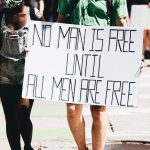
The Protection of Every Person’s Freedom Is An Inherent Right
I deliberately made use of the word, “individual” when discussing nobility because must be an integrated value within the individual officer when interacting with the individual community members, where positive change is most probable.
So, starting off on that positive premise of NOBILITY, I have some observations and thoughts to share.
As I looked at the possibility of long lasting behavioral change within established cultural environments, I recognized that the big “Elephant In The Room” is FEAR.
Fear is often based on a lack of exposure to the external reality that comes from face to face, hand to hand, eye to eye contact with those people and circumstances that normally lie outside of the individual’s awareness.
The fears that lie beneath the uniform, beneath the skin color, beneath the language barriers and beneath the pre-conceived images are what must be faced directly, but in a controlled manner.
So what is the basis of fear? Usually the emotional fires of fear are stoked by the minds failure to question its own automatic thought processes.
It is NOT the minds natural habit to engage in self reectireflection or inquiry. Our minds tend to like the stability of its own beliefs, even when the stability of those beliefs takes it away from objective reality. Police Officer decision making on the street is fast paced, multi-tasking several processes simultaneously, like a well oiled machine.
Any re-training of the officers heart and mind isn’t likely to occur on the streets of his or her community unless they have had the time and opportunity to re-program their “survival” mind from fear responses that are based on misperception and misunderstanding of other peoples realities. Make no mistake, meeting this challenge of change requires GREATCOURAGE.
To challenge the mind toward accepting change, we must have the same COURAGE we had as children when curiosity seduced to move forward and propelled us into the unknown scary places.
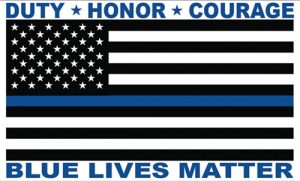
Duty – Honor – Courage Blue Lives Matter
Indeed, this courage to face fearful things, is the basis of all learning and growth. Life is a fear-filled enterprise! Since there are risks to “going where no man has gone before”, as the Star Trek fans all know, it behooves us to cultivate the characteristics of courage and curiosity, that we all too often leave behind as we become adults. There are scary aliens out there – and They Are Us!!
So in the spirit of adventure and curiosity, I would like to propose a test challenge for our communities and law enforcement to take.
It is founded on the principles of Exposure Therapy.
Exposure Therapy is an intervention within the field of Cognitive Behavioral Therapy (CBT), and it has been shown to be very effective in extinguishing fears that create barriers to accurately perceiving threats.
Now applying Exposure Therapy to deal with subjective fears may not work but it has shown promise as an intervention for PTSD, so it has some good history. Remember, we are working toward greater Courageand Nobility!
Ready? Here it is…..
Every minority community must form groups of “host” families that are willing to bring a law enforcement officers into their homes for two weeks at a time.
Every law enforcement agency must require that all officers, no matter their longevity in the department, participatein this test.
The host families will provide room and board, plus actively engage the guest officers in positive and non-judgemental dialogue.
During the first week, the guests officers will not wear weapons, vests, or anything tactical or any indicators of their law enforcement role for the first 2 days.
For those two days, the guest officer is called only by their first name
The host family and the guest officer will courageously, and in the spirit of curiosity, ask non-judgemental questions of each other.
Questions asked should be regarding personal and professional and cultural beliefs that they believe have historically prevented the development of long term trust and understanding during times of community contact.
Then the participants will discuss beliefs that they believe can contribute to building long term trust and understanding both in the job performance as well as the social lives of the officers outside of the work environment.
The host family members and guest officers participating in the test will maintain a personal and secure written journal of each day’s experience. Journal entries are nade daily and reviewed on a bi-weekly basis.
On the third day the guest officer may wear a different shirt that bears their name and official title, but only by agreement with the host family.
On the fifth day, the guest officer can be addressed by their official title when being verbally acknowledged.
After the first week, and with the permission of the host family, the guest can begin adding their normal tactical gear back onto their uniform.
With each piece of gear added during the week, there must be a candid discussion between the guest and the host over the implications of the gear.
Discussion should cover it’s function, and the decision making process that the guest utilizes before using that gear.
When the second week begins, the host family will introduce the guest to a wider circle of their community with an emphasis on integrating the guest into all of those social activities.
On the third day in week two of the test, the host family and guest officer will share what they found helpful and unhelpful as a result of the “exposure test”.
They may share journal entries at this time if appropriate.
On the fourth day of the second week, the guest officer shares with the host family how they think their exposure to the host family during this time has thus far impacted them personally and professionally.
The guest officer must also discuss the barriers they believe they will face within their own group as a result of any personal and professional change in their beliefs and values.
During this sharing, the host family provides the guest with its own observations regarding any change that has or has not occurred in their own feelings, thinking and behavior that are new toward the guest officer.
On the last day of the second week, the guest officer provides the host family with their own observation regarding any change that has or has not occurred in their own feelings, thinking and behavior that are new.
On the last day of the second week, the host family and guest officer must also discuss the barriers they believe they will face within their own groups as a result of any personal changes they have experienced.
Nothing in this test prevents any member of the minority group from being hosted by an officer family. Think of this process as Exposure Fostering
They will also discuss how they will attempt to influence those respective groups going forward.
Now this exercise can’t happen UNLESS
Shared goals are agreed upon by all participants with measurable outcomes.
There are law enforcement agencies willing to participate
There are minority communities willing to participate
There is a commitment to discussing any issues that evolve that block progress and make corrections.
Bridges take time to build, with one outstretched hand that is met by another outstretched hand. From that place of meeting, there comes that shared sense of empowerment that we experience as we move to the middle of the bridge and meet with each as part of one unified community connected by mutual understanding , mutual understanding, open hearts and the spirit of NOBILITY.
Writing about culture change in policing within today’s challenging environment is no easy task. Due to the implications of culture change within policing agencies in today’s confrontational environment, I have tried to keep focused on what I believe are the prominent internal cultural challenges that law enforcement agencies across the country face today.
While I will specifically address the issue of police culture, we must always remember, that the larger societal culture, which itself, is composed of other “sub-cultures” also factor into the how police culture is formed and operates today. Any attempts to modify police culture MUST also acknowledge the values and beliefs that dominate the general culture. It is that general culture where legislatures on both the state and federal level “operationalize” the values of their communities.
An example of this would be the larger societies values and beliefs regarding justice, race, poverty, crime, and so on. These are the base values that go into laws and laws are a base value in culture and more specifically in police cultures.
So first I have to say that I am offering this perspective only from my personal experiences, without offering references to hard research. I am a long-time law enforcement, corrections and mental health professional, with a career that began in the 1980’s. I also a Master Peace Officer, Mental Health Peace Officer, Licensed Professional Counselor and Certified Train the Trainer for the Blue Courage Program and I believe strongly in Community Policing and Restorative Justice. But perhaps my biggest credential is my heart for the profession of law enforcement.
That said, I certainly welcome any dialogue on this issue here at Sawayer Logistics at sawayer.com. So here is my pitch.
Most change within institutionalized settings is unfortunately reactive, as opposed to proactive. This is especially true when in comes to organizational change. The recent violence in America, has once again forced police agencies to reflect on how much or little they should change. Police agencies, by their structure are resistant and slow to change. Some reasons for this are because they are conservative and are accountable to political bodies within the communities they serve. We often hear the adage, “If it ain’t broke, don’t fix it!”. But what exactly is broke and where is broke found?
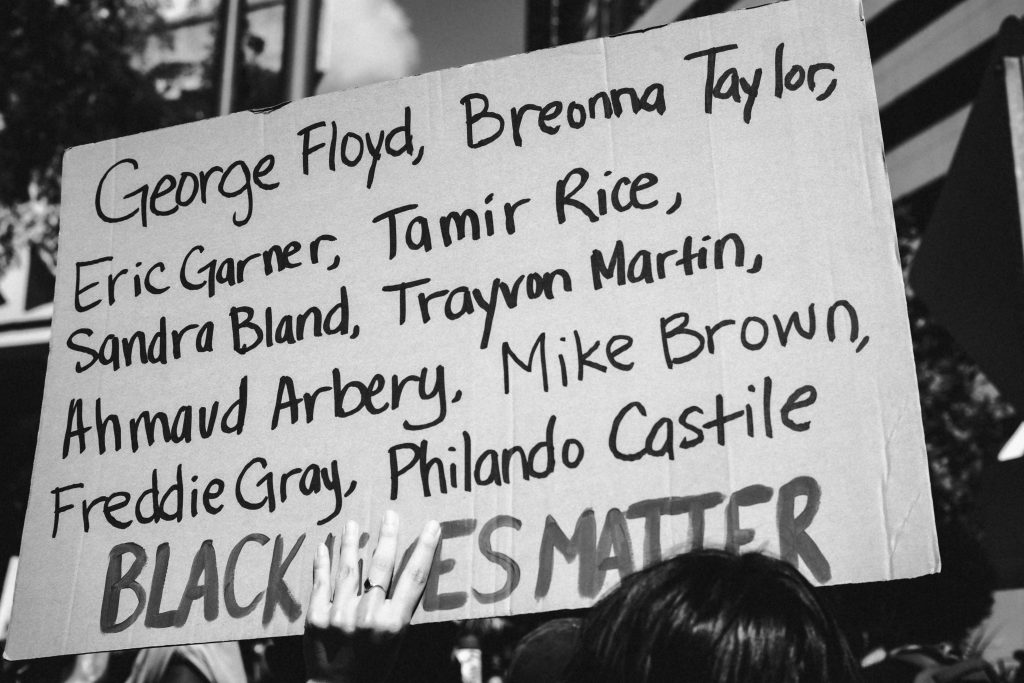
The George Floyd death would certainly indicate that the four police officers involved were broken in terms of both their actions and inaction that lead to Floyd’s murder. We need to ask ourselves if cops can be murderers and that is very distasteful question to even ask. On its’ face, such thoughts seem to fly in the face of what we as professional peace keepers are mandated to do….Serve and Protect.
Since the Floyd issue is far from an isolated event, it may be time to look for answers about who we serve, how we serve, and why we serve. While minorities are over-represented in such tragic encounters with law enforcement, we tend to focus on race relations when addressing the question of what to do. I would suggest that we all, somewhere in our guts, understand that no new or improved trainings, policies, and procedures will have any lasting effect unless we change our current policing culture and the values within that culture.
Cultures are funny animals. They are often created slowly, over decades. They often take decades to change because by their very nature, they are conservative entities. Changing police culture is substantially more challenging than implementing new policies, procedures and trainings. While there are studies on police cultures, there are not many that specifically provide a “how to” paradigm. All of the literature points to the high level of resistance to police culture change from both within the ranks and from police administrators. It’s a tough mountain to climb.
The recent events in our cities and the degree of national and world attention to those events are pushing us up that mountain. If we are to reach the top, we must see the value of making the climb, even after the voices for change become quiet. We must change police culture because we are professionals bearing some of the strongest and most respected job responsibilities in society. So was there an identifiable starting point that contributed to today’s police culture? Let me suggest that was such a point. I will also suggest that we have some available tools to help get to a new beginning.
Since Americas trauma and the resulting transformation, law enforcement has been exposed to a new wrinkle within its’ culture. “Para-Militarization” has invaded the cop culture with a vengeance. The war and the warrior mentality, along with almost free military equipment, from helicopters to transports and Humvees, are standard fare in most agencies today.
At the time of 9-11, nothing seemed to out of bounds in our flight to protect the homeland from foreign terrorists. The intent was to never again be the unaware victim. Americans faced new security procedures at their airports and at their banks.
The less obvious change in procedures was occurring in law enforcement agencies, which historically had some type of command and control infrastructure. As a result, the transition to a more militarized culture was somewhat familiar territory. The availability of the military equipment merely solidified that cultural transition.
I remember training’s that I attended, where we were told that we were the “Sheepdogs”, protecting the vulnerable “Sheep” from the terrorist predators. Ironically, the trainings focus was on school violence. This new mantra ultimately was reflected in the idea that we were now the new para-military heroes, deployed to Americas streets in our surplus military equipment and attire, to kick some serious ass.
Somewhere and somehow this new mindset morphed into a permanent part of the police culture in such a way that it became the antithesis of community policing. With foreign enemies largely destroyed on American and foreign soil, the new cop culture with all of its surplus military equipment, seemed like a dog without any cats.
The implementation and deployment of special units know as SWAT teams began to play a central part in departments across the land. In the process, the officers participating in those units began to gain a great deal of cultural influence and the mindset within policing went from “we are part of the community”, to the “community are dumb sheep and we are superior sheepdogs”, to “them vs. us”.
Now to be clear, historically, law enforcement had its’ “suspects” some of which included those who were clearly “not us”. Foreigners, minorities, the poor, the mentally ill, and the law violators living in our communities. There was a growing institutionalized prejudice within the policing culture, that, until the last 20 years, wasn’t even discussed in training academies. There were no Humvees or tactical units in most departments back then.
With the 9-11 terrorists extinguished, the old familiar, “not us” groups became the new “bad guys” or to put in another way, the “them”. Agency leadership in departments could not resist the offer of getting surplus military equipment to supplement their fleets. Most departments had few dollars to spare for such costly equipment. It would take little effort to move toward creating SWAT tactical teams to utilize the new armada.
No one objected, not the city councils, not the county commissioners, not the state governors, not the congress, and not even members of the local communities. Without open discussion regarding why and how this para-militarization was happening, the parameters of its’ implementation and its’ goals, the cultural change went underground and out of sight.
The new police culture was now one that had the capacity for aggression and tactical interventions. Community policing, where officers were in personal contact with the man on the street for most departments stopped. Contacts with the public became formal and impersonal. It was now, “them vs. us”.
The cop, sitting in the standard issue patrol car holding the para-military, aggressive mindset doesn’t need a Humvee to feel his power over others anymore. The “Sheepdog” has now lost it’s protective instinct toward the sheep. There are good sheep and bad sheep…white sheep and black sheep.
Body cameras, which became possible and practical to issue because of technology, were supposed to protect cops and community members alike. Instead they were often resented by line officers as just another piece of “squealer” technology that carried yet another set of policies and procedures that had to be followed. In actuality, these cameras often have served a preventative function when seen as an officer protection.
So what does all of this imply for changing police interactions with the communities they serve?
I contend that the violence on American streets will not be solved by just better training alone because the training will not overtake the current police culture. Instead, there has to be more open contact and communication at the “street officer” level with the common and every day community members they serve.
There needs to be not just more tactical trainings but also a focus on officer mental and spiritual well being. It’s the only way to stop the “them vs. us” mentality that justified para-military interventions. Yes, we can have working groups and task forces, but the real change is at the street level by empowered cops who have the right mindset and the right heart for the profession and are rewarded for that as opposed to being shamed for it!
The most effective equipment has to be controlled by the heart first and the mind second, which then controls the body. For those of us who are authorized under very limited conditions, to take a life, the heart must be right.
Policies and procedures and trainings don’t change the heart. Open conversations and regular contact with the communities we serve as “street level cops” however does help tremendously.
It’s that contact that can either foster paranoia and hate or goodwill, especially when it involves being in touch with the “them”.
It will take time. Maybe we need to just go ahead and start painting those Humvees in pastels colors now!!
The Blue Courage training program for law enforcement officers and the perspective that it offers on community justice and community policing, should be a critical component of most law enforcement training. It and similar programs are what is needed now, more than new rules or new procedures or new training, you must change the heart in order to have positive community contact, which takes…well…Blue Courage!
The BlueCourage.com webpage is full of great articles and other offerings for LEOs (Law Enforcement Officers).
There is a vast amount of information that is accessible thru site links on the internet.
By incorporating links that are relevant to the areas of content discussed on the Sawayer Logistics web page, I am able further educate blog readers, using interesting materials created by other knowledgeable experts in the fields of mental wellness, logistics, coaching and counseling. As time goes on and readers request more types of information, the list of links will grow. Feel free to make suggestions for links that you think fit the topics I present here.
This post is the starting place to browse those links, click and explore.
Also, don’t forget the YouTube links over on the Navigation Menu!!
HAPPY CLICKING!
Why A clinical Social Worker Quit Being A Therapist
It’s a well recognized fact that major, wide spread disasters often bring about unintended consequences. The Covid 19 worldwide pandemic has been such an event, causing unintended consequences for the provision of mental health services. While these consequences have been “unintended” they are not necessarily bad.
Prior to the Covid19 pandemic, video conferencing was just taking on deep roots in the business world. Platforms like Skype, Zoom, and Lifesize Cloud, were valued for their different capabilities, but especially because the provided good security protocols against cyber criminals along with financial costs savings.
Some medical health care systems that served rural parts of America, where doctors were in short supply had also begun using video conferencing to provide expanded services to both patients and doctors living in remote and thereby often under served areas.
One such use of video conferencing is Project ECHO, https://echo.unm.edu/, which is generally University based, was already providing telehealth services to individuals, and consultation from medical specialists to rural doctors who were connected via the internet.
Outside of business and medical applications of video conferencing, there was simultaneously, a growing number of popular social media platforms that had become available on line. The more popular ones being Messenger, JOI, DUO, WhatsApp, Hangouts, Marco Polo, Face Time, Houseparty, Instagram, and Discord were quickly replacing texting and phone calls. But while these technologies and platforms were already in place prior to Covid19, their use was aimed mostly at general social sharing and entertainment.
Covid19 changed all of that at warp speed. The newly invoked public health protocols called for social distancing and shelter in place rules which meant that individual mobility and interpersonal contact was restrained in an effort to limit contagion of Covid19.
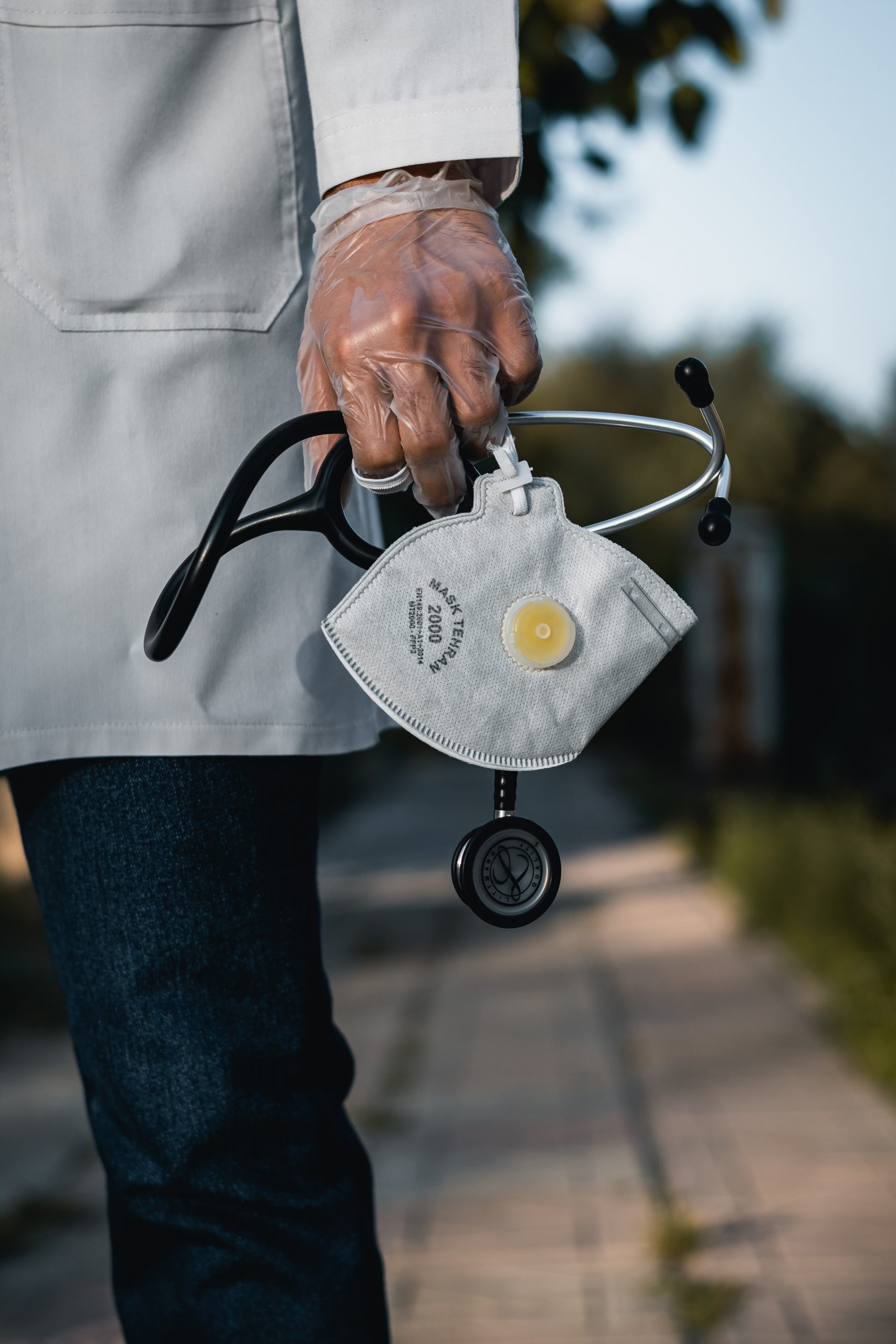
Personal protective equipment items such as disposable gloves and masks were being used for the times that individuals had to venture outside of their homes, causing further restraint. Workers and the business services they were part of were divided into essential and non-essential categories.
Any venue where a large gathering was possible was closed or severely limited in numbers. This included work sites, churches, schools, etc.
This sudden change in mobility and physical contact then created it’s own set of problems. Prior to the pandemic, Mental Health Service providers, had begun utilizing video technology to maximize mental health resources and save time, had to a limited degree, already been in place, but were used mainly as an option to the preferred face to face contacts. The reason? Insurance reimbursements. Most of the insurance payers would not reimburse for video therapeutic services. When individual therapists and mental health agencies attempted to limit their staffs exposure to Covid19, the use of video conferencing for staff working from home grew as fast as the virus!
Most clients had access to smart phones, which were capable of video conferencing and many consumers were already familiar with video communication thru their own personal use of social media. But this increased utilization of video conferencing was only the beginning for changes in Mental Health Services.
Covid19 introduced multiple mental and physical stressors across the board. There was no physical or emotional escape into a place of safety.
This was compounded by he lack of any available specific vaccinations against Covid19, the long incubation period, the high level of contagion during the incubation period and the lethal outcomes for certain populations, the governmental mandated social distancing, the inability to be with loved living outside the home or with family who were stricken by the disease, the over-burdened health care system that struggled to keep up with known cases while keeping staff safe, and the fear that a lack of testing, meant that the pandemic could be anywhere and could be much more widespread than was known.
All of these issues, overwhelmed the normal physical and emotional coping mechanisms in much of the population.
Long term, forced isolation began to manifest itself in symptoms of depression, anxiety, PTSD, and increased substance abuse. Hospitals and emergency rooms that were now focused on providing medical interventions to the virus patients, had to limit or re-prioritize mental health services.
But a silver lining from the pandemic unexpectedly emerged for both medical providers and mental health providers. The silver lining came in the form of redefining social and legal priorities and specifically by waiving traditional Federal, State, and local regulations that slowed down the ability to provide direct medical and psychiatric services quickly and across jurisdictions.
Legal restrictions for professionals who were now being asked to provide help outside of the State where they held licensed to practice had to be relaxed and waived. The insurance companies began to authorize increases in the number and types of services that they would pay for. This was especially true for mental health service providers.
Previously, it was very difficult to get reimbursed for providing tele-behavioral health to individuals. The mental health system was historically geared to paying for services provided in “brick and mortar” offices and clinics, which had now shut down in order to limit physical contact between staff and clients.
The traditional paradigms of service provision were forced to shift and the shift was made available by the reliability of the internet and dependable software platforms that could temporarily substitute for the brick and mortar service model.
Schools and Churches quickly followed suit. The new reality was virtually, “virtual” reality.
Now to be clear, “virtual” is not a substitute for being with another individual in person either for social contact or professional contact. It is merely a means of providing services, when the in person contact is impractical or potentially dangerous. “Virtual” encounters, do require the investment in the ownership or at least some electronic hardware to access to video technology.
However the financial investment is offset from the realized savings from the initial outlay. A mental health agency lowers costs for staff travel, hotels, and food, reduced staff stress and reduced sick leave while also increasing productivity related to time efficiencies.
Then there is the time saving factor for consumers and the overall convenience to them with access to tele-behavioral health. In addition, there are generally lower fees for services due to the fact that the overhead that therapists and agencies endure from of utilities, taxes and mortgage costs that comes with “brick and mortar” can be greatly reduced and thereby passing on those savings to their clients. Another positive for mental health consumers is the ability to seek mental health services without the fear of being seen in a clinic or a therapists office by people they know.
It will now be “virtually” impossible for major segments of the society who were able to utilize this technology, be they health care providers, schools, mental health practitioners to not insist that these emergency models become institutionalized after the pandemic has gone. The mass use of these technologies is out of the bag, and if used in the right mix between in person contact and virtual contact, it promises to change how mental health services, education, health care, faith services, and perhaps most importantly, family interactions will work.
The horse is out of the barn and the bridle is removed. It’s now time to learn some new riding skills!
Also view the YouTube Video below on Mental Health in
As a Texas Commission on Law Enforcement Certified Master Peace Officer with over 26 years of combined experience in the fields of corrections and policing, I took great pride in serving the public safety needs of our communities through training and education.
One of my proudest accomplishments of late, is attaining the status of being credentialed as a Trainer of Trainers for the Blue Courage policing program. This status allows me to go into law enforcement agencies and provide that training to agencies interested in implementing the Blue Courage Program and have the option of having their own Blue Courage trainer in-agency, or contracting with Sawayer Logistics to provide the training.
Read more
Blue Courage is what most law enforcement agencies are hungry for in these times of great stress for their officers, dispatchers and staff. See the link: https://bluecourage.com/about-us/
Contact Sawayer Logistics to learn more about what Blue Courage has to offer your department as an investment in officer well-being. The trainers at Blue Courage would love to set up a training for your department.
Another source of great online training for agencies is also available thru the U.S. Justice Departments’ Community Oriented Policing Services known as C.O.P.S. (see https://cops.usdoj.gov/
The website for Blue Courage, puts it this way.Blue Courage is a transformational two-day leadership development workshop designed for all levels of the organization. This revolutionary educational process is a holistic approach to developing our people. It will touch hearts, awaken minds and ignite spirits through dynamic presentations and learning processes. (Available for law enforcement, corrections/detention, non-sworn personnel, and for the military; All customized to incorporate the language and the culture of each profession.)I can tell you from personal experience, once your mind and heart are exposed to the principles taught, you experience a sense of being freed to think and to feel the dignity that comes from sharing with other like minded trainers and trainees.
I have worked with Vets from most of the service branches as a therapist in the last four years with much of my contact involved crisis interventions where there were some total melt-downs. The last incident involved a SWAT team deployment. Sometimes, folks tend to over-react when Vets have these melt-downs. Why? Well, not everyone is trained as a military sniper or Special Forces combatant, and that gets some special attention.
Personally, I grew up in a military family and spent a lot of time on Army, Navy and Airforce installations back then.
I experienced first hand the issues that occured when active duty military servicemen return to civilian life as Veterans and have serious re-integration issues.
Because of this professional and personal history of mine, working with Veterans experiencing personal issues is a passion of mine.
That said, I think it’s important to remind ourselves that PTSD is not exclusively a problem that is exclusively found in the Veteran communities. As you migh imagine, PTSD can occur from any numer of life events. The letter “P” stands for POST, the letter “T” stands for TRAUMATIC, the letter “S” stands for STRESS, and the letter “D” stands for DISORDER. You don’t see a V for Veteran because the disorder happens in many situations. Wartime or even deployment is just one paticular situation that Veterans are exposed to.
When military discharge of a person who has a known or even unknown PTSD diagnosis occurs, this greatly complicates the stresses of re-adjustment and re-integration back into civilian live. As you can see, for some Veterans, the reintegration itself can present a lot of adjustment issues. These same issues may serve as “triggers” for either a diagnosed or undiagnosed PTSD condition.
In some cases there may even be a history of being exposed to head trauma while in the military, which if severe enough can create another bad actor, TBI or Traumatic Brain Injury.
I don’t offer the new EMDR intervention for those suffering deep and active troubling symptoms from diagnosed PTSD, I do refer out to individuals who are trained, effective EMDR clinicians.
Again, these types of traumas also not exclusively a only Veterans issue, but it is prevalent among that community.
Other sources of PTSD and TBI can be a result of sexual assault traumas, violent accidents, witnessing some type of violent event, being brutally assaulted. I really hope you get the idea!
In the last two years, I discovered a great resource SPECIFICALLY for Veterans that I want to share.
That resource is the Headspace and Timing webpage of Duane France who has been a leader in the Veterans Mental Health Space. See some information about his current work at: https://www.fcsprings.com/about-us/leadership-staff/duane-france. Duane has graciously agreed to allow me to share these with my readers.
I have attached a link to the site below and within the site is a treasure of blogs, resources AND great podcasts.
You will also see that in addition to being a licensed clinician, Duane is a prolific writer as well.
A very dedicated and profusely productive advocate for Veterans….He Is!
Another great website for Veterans and families you will definitely enjoy and find interesting is Veterans MTC. They can be found on both Instagram and Facebook. You can give it a look by clicking their web-page http://veteransmtc.com
Often times, couples are interested in getting some outside counseling or coaching when they are unable to solve the problems that life is presenting for them in the moment.
If WE as a couple go for coaching or counseling, many questions will get asked about what it means to go for outside help.
Does going for coaching or counseling as a couple mean we have somehow failed?
Individuals who are coupled up may have many questions about either couples coaching or counseling.
They may ask about the differences between counseling and coaching. Coaching is a term that for many people does not conjur up images of being mentally ill as counseling does for some people.
There are questions about how exactly coaching differs from exactily?
What about questions of how often we will have to go and for how long?
And of course the money question of how expensive is it and can we afford it?
Is remote video counseling or coaching over the internet secure?
Is video counseling or coaching as effective as face to face counseling or coaching?
Let me answer some of the questions with a simple list
Internet Coaching and/or Counseling works just as well as face to face counseling does.
Counseling is past oriented and deals with many historical couples problems in an attempt to deal with current problems.
Coaching is future oriented and deals mainly with visioning positive and measurable couples goals. It is very HOPE oriented
Being willing ask for help is a sign of maturity and growth, not a sign of failure and certainly not a sign of mental illness.
Making changes to your lives together is challenging and will require a committment to several months of work, but it is a work of love.
You will know when you have improved as a couple and are ready to try again on your own to re-experience the connection you yearn for.
Its natural to have feelings of embarassment or shame when you open up your relationship to a counselor or a coach. In the beginning that is perfectly OK and normal. Once you begin, you will wonder why you had those feelings at all.
Your partner may really love the fact that you have made changes as a partner, as result of going through couples coaching or counseling.
The journey on your counseling path, is the best journey you will ever take!
Here is a link that further explains how couples coaching and couples counseling differ and where they share common ground!
I am often asked what the difference is between seeing a counselor and seeing a life coach. It’s a great questions and the answer is pretty straight forward. Here at Sawayer Logistics, we provide both counseling services and coaching services.
What is Life Coaching
Life coaching specifically focuses on the present issues you are needing guidance on with a view toward growth and toward the future.
There is very little looking back at individual histories and problems. Also, the life coach can be certified by a recognized certifying agency.
This usually means that they are aware of the ethics of providing coaching and what are the best ways to coach.
Since there is not any State license required at the present time in any of the States, to work as a life coach, we are less limited to who we can see and where we can provide our coaching services.
This means that thru the technology of the internet, we connect thru the secure video platforms of Zoom.com, Doxy.me or Vsee.com, which allows me to see you wherever you have the technology to make the video connection.
In order to earn my credentials as an Expert Level Life Coach, I had to take a series of training courses and tests in order to be certified. This is not a one time process and we are always involved in continuing education.
What is Counseling
In the State of Texas, becoming licensed as a Professional Counselor requires a Master’s Degree in a related field, thousands of hours of training and education, enduring a supervised practicum and taking a state examination.
Re-licensure happens every two years and each counselor must show that he or she has taken the required courses in Ethics and Jurisprudence plus additional training hours in counseling related areas.
Individual Counseling by a licensed counselor is a bit more restricted than being an Expert Level Coach.
How is it restricted? Well, first of all, as a Licensed Counselor in Texas, I am not at present able to provide therapy services in other States or Countries.
Having said that, there is strong governmental interest as a result of the Covid19 Pandemic to change those restrictions and allow any duly licensed Counselor in one State to practice across State Jurisdictions, with the appropriate oversight.
Paying cash or using insurance to pay for counseling makes a difference
Individual counseling is also affected by the way you pay for it. If you are a “private pay” client and don’t use your health insurance, we don’t have to give you an official diagnosis and provide that to your insurance company to justify payment.
If you are using insurance or your EAP program for payment, then we are usually asked to provide them with reports and diagnosis. Also, they often set a limit on the number of sessions they will pay for up front. They can extend the number of sessions, but normally it is a set number.
Let me emphasize that as long as you acknowledge that you are freely seeking counseling, then it doesn’t matter who pays because your looking for a solution to a difficult problem.
Still some people see having any kind of personal problem as an embarrassment and fear social repercussions if the word gets out that they are seeing a mental health professional.
On the other hand, when there is some “involuntary” pressure to get counseling, that is something to discuss in the very first counseling session. You are free to chose, and I am here to assist you!
Individual or Couples Counseling, as opposed to coaching, is also focused on problems and on the historical issues that may have contributed to the present problems being experienced. Of course, like coaching, the goal is growing in your coping skills to enjoy a better future!
In both the private pay and insurance pay scenarios for counseling discussed above, you will have to sign consents for release of any information and releases of liability paperwork.
At Sawayer Logistics we provide you with information on counselor standards and ethics, information on the fee schedule and other information about the counseling process you need as a consumer.
That’s about it as far as how the individual or couple counseling differs from life coaching.
If you have questions, send me an email and I will be happy to respond. Here is the link for further reading!
In a previous post titled “How do life coaching and counseling differ”, I contrasted the two modalities of services that we provide here at Sawayer Logistics (sawayer.com).
In this post, I want to be a little more focused on what life coaching offers specifically. I have attached a link below for further reading if you are interested.
So Life Coaching or Personal Coaching is a pretty broad term and is often used in several specialized areas such as nutritional coaching, fitness coaching, writing coaching, financial coaching, parent coaching, etc.
While the focus can be different for each, “coaching” specialty, in general, coaching per se, has it’s own common elements.
Because any expert can be a coach thru their own training and life experiences in a particular area of specialization, by and large, there are NO STATE LICENSES is required to provide those coaching services. So there is good news and bad news. The “good news” is that coaches, thru the internet, can sell their services to any willing customer, world-wide! Wow, talk about a customer base!. The “bad news” is that if you are looking for a governmental entity to re-assure you that the coach you employ is licensed, your pretty much out of luck.
HOWEVER, don’t despair just yet because many professional coaches have taken formal training in how to provide effective coaching by using what are called “Best Practices” recognized by most credentialing entities in the field of coaching. A professional coach can earn various “professional certificate”, that will confer the title or credential of “expert level life coach”.
It’s important to remember that the focus of coaching is growing your capacity for success in the area you are interested in. Coaching is “future focused” and builds on your “existing strengths”. As such, there is not much looking back on where you failed. Rather we look at where you are right now and how we can get you to your goal. This involves lots of things from writing out your plans, using vision boards, keeping a journal, and determining some way to measure your progress in a concrete way.
If your goal is to have better health thru nutritional coaching then we will look at measurable numbers. As an example, initial lab test results for cholesterol or high sugar levels, or blood pressure levels form the baseline.
Together we then set new goals to improve those numbers thru nutrition, exercise, diet and improved self image.
Hopefully, you now have a fairly specific idea of how coaching works. I look forward to reading any comments or questions you post in the comments section. Click on the link below for even more useful information on this topic!
Fees for coaching are based on how much time we spend together and can be done on a half-hour or hourly basis at the rate of $50 per 30 minutes. And of course, there is a lot you will do on your own, between our sessions.
Please feel free to contact us if you need more information regarding fees and scheduling an virtual coaching appointment.
Read more
We use cookies to ensure that we give you the best experience on our website. If you continue to use this site we will assume that you are happy with it.